
"Scandinavian coffee"
80 article(s) found
Coffee Culture Common sense Coffee Culture in Northern Europe
The coffee culture in central and northern Europe is not as enthusiastic as the Italians or as romantic as the French. People in central and northern Europe drink coffee rationally and gently, just like their organized national characteristics. European life and coffee have become almost inextricably linked, except for the distinctive coffee culture in Italy and France, from Austria and Switzerland.

Espresso contains less caffeine than regular coffee
A cup of regular brewed coffee contains 115 mg of caffeine, espresso (and coffee brewed in a percolator) contains about 80 mg, and instant coffee contains only 65 mg. Decaffeinated coffee is not complete without caffeine, it is about 3 milligrams. A can of Coca-Cola contains about 45 mg of caffeine, Pepsi 38 mg, Mountain Dew 54 mg, and TAB47 mg. Tea contains about 40%.

Espresso contains less caffeine than regular coffee
A cup of regular brewed coffee contains 115 mg of caffeine, espresso (and coffee brewed in a percolator) contains about 80 mg, and instant coffee contains only 65 mg. Decaffeinated coffee is not complete without caffeine, it is about 3 milligrams. A can of Coca-Cola contains about 45 mg of caffeine, Pepsi 38 mg, Mountain Dew 54 mg, and TAB47 mg. Tea contains about 40%.
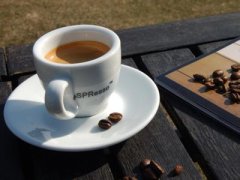
Espresso coffee contains less caffeine than regular coffee.
A cup of regular brewed coffee contains 115 mg of caffeine, espresso coffee (and percolator brewed coffee) about 80 mg, and instant coffee about 65 mg. Decaffeinated coffee is not completely decaffeinated and is about 3 mg. A can of Coke contains about 45 mg of caffeine, Pepsi 38 mg,Mountain Dew 54 mg, and TAB47 mg. Tea contains about 40

Roasting Kenyan AA Coffee beans by hand net extraction parameters of Kenyan Coffee Brewing
Professional coffee knowledge exchange more coffee bean information please follow the coffee workshop (Wechat official account cafe_style) personally like the master's Nordic shallow baking works, unwittingly there are a lot of wooden clips on the coffee bag, so before this manual web baking practice, take some time to study and review again.
Coffee has a certain therapeutic function after roasting.
In recent years, the health effect of phenolic acid has attracted people's attention. it can resist oxidative diseases such as coronary heart disease through the intake of fruits and vegetables.
Did you know that espresso coffee has less caffeine than regular coffee?
A cup of regular brewed coffee contains 115 mg of caffeine, espresso coffee (and percolator brewed coffee) about 80 mg, and instant coffee about 65 mg. Decaffeinated coffee is not completely decaffeinated and is about 3 mg. A can of Coke contains about 45 mg of caffeine, Pepsi 38 mg,Mountain Dew 54 mg, and TAB47 mg. Tea contains about 40
Did you know that drip coffee contains less caffeine than regular coffee?
A cup of popular brewed coffee contains 115 milligrams of caffeine, espresso (and coffee brewed in a percolator) contains about 80 milligrams, while instant coffee contains only 65 milligrams. Decaffeinated coffee is not complete without caffeine, about 3 milligrams. A can of Coca-Cola contains about 45 mg of caffeine, Pepsi 38 mg, MountainDew 54 mg, and TAB47 mg. Tea contains about 4.
The history of coffee roasters
As early as the 13th century, the Arabs invented to put coffee beans in a pot, stir-fry them with fire, grind them into powder, and then brew coffee. The early Arabs liked to bake the beans shallowly and boil them with spices such as cardamom. Later, this coffee stir-frying method spread to Syria, Turkey and Egypt, where it was used to stir-fry the coffee black, then grind it into powder and add it.
Coffee health coffee has a certain therapeutic function after roasting.
In recent years, the health effect of phenolic acid has attracted people's attention. it can resist oxidative diseases such as coronary heart disease through the intake of fruits and vegetables.

Did you know that espresso contains less caffeine than regular coffee?
A cup of regular brewed coffee contains 115 mg of caffeine, espresso (and coffee brewed in a percolator) contains about 80 mg, and instant coffee contains only 65 mg. Decaffeinated coffee is not complete without caffeine, it is about 3 milligrams. A can of Coca-Cola contains about 45 mg of caffeine, Pepsi 38 mg, Mountain Dew 54 mg, and TAB47 mg. Tea contains about 40%.

If you knew these 5 things, would you still drink Starbucks coffee? Starbucks Coffee Features
Starbucks has sold 200 million pumpkin spice lattes since it introduced them in 2003. Some enthusiasts can't resist the pumpkin latte charm and can't help but wonder about the secret. Starbucks responded that the latte contained a pumpkin sauce and could be sold to the public. But there's a recipe

Do you still like to drink Starbucks after you know the five secrets of Starbucks?
Since the introduction of pumpkin lattes in 2003, Starbucks has sold 200m cups of pumpkin spice lattes. Some enthusiasts can't resist the charm of pumpkin latte and can't help but want to know the secret. Starbucks responded that the latte contains a pumpkin sauce that can be sold. But with such a recipe,

Coffee roaster development history Capsule coffee machine introduction
Coffee beans were fried in iron pans in the early days. After coffee was introduced into Europe, Europeans used Turkish iron pans to fry beans on the one hand, and later invented hand-rotating roasting, which could bake several pounds of beans at the same time, which was used by some coffee shops. In the 1860s, large roasters began to appear, and in 1867 the use of blowers to cool beans after roasting gave birth to

What's so special about the coffee made by the French kettle? Who invented the French pressure filter coffee maker?
Professional baristas Please follow the breakthrough in coffee brewing in the coffee workshop (Wechat official account cafe_style): coffee made from French coffee pots contains more caffeine, caffeinol, and oil associated with high cholesterol. But not all of these chemicals are bad. They help prevent hepatitis. From the beginning, the French paid more attention to making coffee than others, Willia

Where can I drink coffee on hipster in the United States? City of Wenqing-six specialty cafes in Portland
Professional baristas please follow the coffee workshop (Wechat official account cafe_style) Portland (Portland), the third largest city in the northwestern United States, is known as the cultural youth stronghold in the United States, attracting countless visitors with its quiet, slow and optimistic lifestyle. Although the word "hipster" has been abused and even derogatory recently, the urban atmosphere of Portland still lingers.

The evolution history of coffee roaster
As early as the 13th century, the Arabs invented to put coffee beans in a pot, stir-fry them with fire, grind them into powder, and then brew coffee. The early Arabs liked to bake the beans shallowly and boil them with spices such as cardamom. Later, this coffee stir-frying method spread to Syria, Turkey and Egypt, where it was used to stir-fry the coffee black, then grind it into powder and add it.
About the history of coffee roasters
The history of coffee roasters as early as the 13th century, the Arabs invented to put coffee beans in a pot, heat and stir-fry them, then grind them into powder, and then brew coffee. The early Arabs liked to bake the beans shallowly and boil them with spices such as cardamom. Later, this method of stir-frying coffee spread to Syria, Turkey and Egypt, where it was used to stir-fry coffee black.

Introduction to the flavor and taste of coffee manor in Baisheng Village, Taiwan Coffee History
The history of Taiwan's formal systematic cultivation of coffee can be traced back to the period of Japanese occupation. In the early stage, due to poor cultivation techniques and poor fermentation treatment, the flavor appeared chaotic; but in recent years, with the substantial growth of the population drinking coffee, the demand for high-quality coffee is thirsty, so Taiwan coffee farmers, with the assistance of agricultural administrative units, start to improve the soil quality and crop environment in many ways.

coffee roasting| How many ways to roast coffee?
Professional coffee knowledge exchange More coffee bean information Please pay attention to the coffee workshop (Weixin Official Accounts cafe_style) Roasting definition 1 The so-called coffee roasting refers to the heating of raw beans to cause a series of physical and chemical reactions inside and outside coffee beans, and in the process to produce coffee acid, bitter, sweet and other flavors, forming